Day porter service keeps your facility clean during business hours with quick response to restrooms, entryways, spills, and high-touch areas. After-hours cleaning delivers the full nightly reset without disruption. Learn the key differences, when each option makes sense, and how a hybrid plan can keep your space consistently customer-ready.
If your building looks great at 8:00 AM but slips by lunchtime, you don’t necessarily need “more cleaning.” You need the right type of cleaning at the right time. That’s where the day porter vs. after-hours question matters.
Both services can deliver a spotless facility—but they solve different problems. In this guide, we’ll break down the differences, where each option works best, and how to choose a plan that protects your brand, your people, and your day-to-day operations.
What is day porter service?
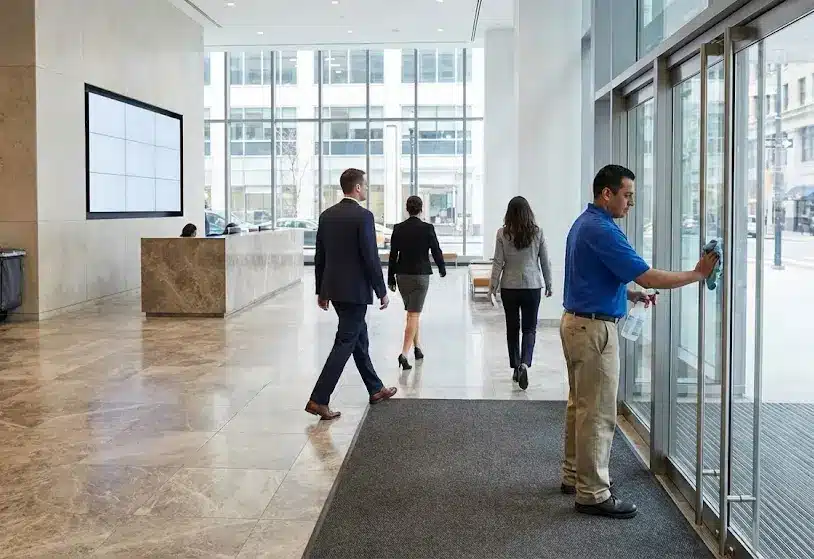
A day porter is onsite during business hours (or peak hours) to handle continuous upkeep and fast response. Think of it as “facility care in real time.”
Day porter tasks often include: keeping restrooms presentable and stocked, managing entryways (tracked-in moisture and debris), wiping high-touch points, spot cleaning spills, refreshing lobbies, and addressing issues before they become complaints.
What is after-hours cleaning?
After-hours cleaning happens when your facility is closed (overnight or early morning). This is when crews can complete the “full reset” without disrupting occupants or customers.
After-hours work is ideal for deeper routine cleaning like vacuuming, mopping, floor care cycles, breakroom and restroom sanitizing, dusting, trash removal, and detail work across the entire facility.
The real difference: response vs. reset
Here’s the simplest way to choose: if your biggest issue is what happens during the day (restroom traffic, spills, fingerprints, entryway mess), you’ll benefit from a day porter. If your biggest issue is the overall condition of the building (floors, dust, full-room cleaning, consistent nightly standards), after-hours cleaning is the foundation.
Most high-performing facilities use a combination: a strong after-hours reset, plus light daytime support where traffic demands it.
When day porter service is the best fit
1) Your facility is open to the public
If customers, members, residents, or visitors walk in all day, cleanliness is judged in real time. A day porter helps you stay ahead of visible issues like smudged glass, messy entryways, overflowing trash, and restrooms that need quick attention.
2) Restrooms are your #1 complaint area
Restrooms can shift from “fine” to “unacceptable” fast. A day porter keeps dispensers stocked, addresses odor triggers early, and maintains a clean presentation throughout the day—especially during peak traffic.
3) Weather and foot traffic are working against you
Rain, sand, and tracked-in debris destroy first impressions and create slip risk. Daytime entryway attention (mats, spot mopping, quick debris removal) prevents the “dirty by noon” problem.
4) You need quick “save the day” support
Spills, surprise visitors, events, and urgent messes are part of facility life. A day porter gives you a reliable, responsive solution that keeps operations smooth without pulling your internal team away from their work.
When after-hours cleaning is the best fit
1) You want consistent building-wide standards
If the building needs a dependable baseline—clean floors, emptied trash, sanitized breakrooms and restrooms, dust control—after-hours cleaning delivers the most comprehensive reset.
2) Your team needs quiet, low-disruption cleaning
Many facilities prefer cleaning outside business hours for privacy, safety, and focus. After-hours service allows crews to work efficiently without interrupting staff, meetings, classes, or customers.
3) You need deeper floor and surface care
Detailed vacuuming, machine scrubbing, glass detail work, and structured restroom sanitation are often best performed after hours when the space is empty and safety signage can remain in place as needed.
The hybrid plan: the “best of both” approach
If your facility is high-traffic, the hybrid plan is usually the sweet spot: after-hours cleaning handles the full reset, while a shorter day porter shift covers the high-visibility zones that can’t wait until night.
Example: an after-hours crew cleans the building nightly, while a day porter covers restrooms, entryways, and touchpoints from 11 AM–3 PM when traffic peaks.
What affects cost the most?
Pricing isn’t only about “square footage.” It’s driven by traffic, restroom demand, floor type, how many public-facing areas you have, and how quickly issues accumulate during operating hours.
If your building has steady public traffic, the cost of not having daytime support often shows up elsewhere: more complaints, more emergency calls, more floor restoration, and a “never quite clean” reputation.
How to decide in 5 questions
1) When do cleanliness issues happen most? If it’s midday, you likely need day porter coverage (even if limited hours).
2) Are restrooms a high-traffic zone? If yes, plan for multiple touch-ups during operating hours.
3) Is your entryway getting destroyed by traffic or weather? If yes, you’ll benefit from daytime entryway control.
4) Do you need the building fully reset daily? If yes, after-hours service is your baseline.
5) Do you want visible cleanliness for customers and occupants? If yes, a day porter helps you maintain a clean look when it matters most.
Facility examples: what typically works best
Office buildings
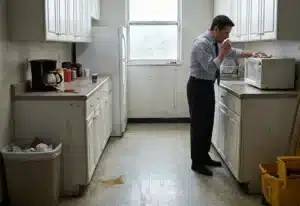
Most offices do well with after-hours cleaning as the foundation. Add day porter coverage if you have heavy lobby traffic, frequent meetings, shared kitchens, or restrooms that get hit hard throughout the day.
Explore Office Building Cleaning
Retail spaces
Retail is judged by what shoppers see right now—floors, glass, restrooms, fitting rooms, and checkout areas. A hybrid plan is common: a nightly reset plus daytime touch-ups during peak hours.
Explore Retail Cleaning
Fitness centers
Gyms and studios often require visible cleanliness throughout the day: equipment touchpoints, mirrors, locker rooms, odor control, and quick-response support. A hybrid plan (or strong day porter presence) is typically the best fit.
Explore Fitness Center Cleaning
Car dealerships
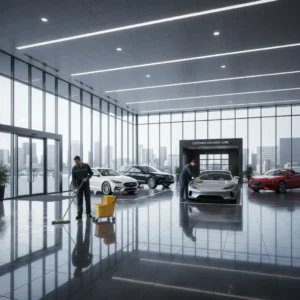
Showrooms and customer lounges need to stay spotless during open hours, while service bays often require safe, planned cleaning protocols. Many dealerships use after-hours service for the full reset and a short day porter shift to keep the showroom and restrooms customer-ready.
Explore Car Dealership Cleaning
Government buildings
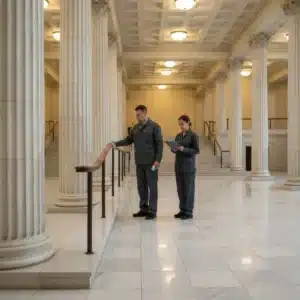
Government facilities often require documentation, consistent standards, and careful scheduling to avoid disrupting services. After-hours cleaning is common for full resets, while day porter support helps keep public-facing areas (lobbies, counters, corridors, restrooms) clean during operating hours.
Explore Government Building Cleaning
Associations, HOAs, and shared community spaces
Shared spaces like clubhouses, mail centers, gyms, and lounges need consistent care—especially around meetings and events. After-hours cleaning provides the baseline, while day porter support can be scheduled for event windows or peak usage days.
Explore Association Janitorial
How to keep service consistent (no matter which option you choose)
Set “critical zones” and standards
Define the areas that must always look great: entryway, lobby, restrooms, breakrooms, glass, and high-touch points. Then decide what “clean pass” means for each zone (no streaks, no odor, no visible debris, stocked supplies, and consistent presentation).
Use a simple request workflow
Even the best plan needs a fast way to report issues. When staff can submit a request quickly (ideally with location details and photos), response improves and small problems don’t turn into big ones.
Submit a Work Order
Build your schedule with a layered approach
Most facilities need a layered cadence: daily touch-ups, weekly resets, and periodic deep care. This prevents build-up, protects floors, and reduces complaints over time.
See a practical cleaning schedule you can copy
Ready to choose the right plan?
If you want help mapping the best approach—after-hours, day porter, or a hybrid—Nexus Facility Services can build a cleaning plan around your traffic, your hours, and your standards.
Get a Free Cleaning Quote
Care You Can Trust, Service You Deserve.