Poor facility hygiene costs more than just a bad first impression. It can increase sick days, raise slip-and-fall risk, drive customers away, and accelerate wear on floors, restrooms, and high-traffic areas. In this post, we break down the real business impact of inconsistent cleaning—and share a simple, practical plan to prevent problems with the right routines, checklists, and rapid-response workflow.
Facility hygiene isn’t just about appearances. It impacts employee health, safety, customer trust, and even the lifespan of your building materials. When cleaning gets inconsistent—or reactive—costs show up fast: more absences, more complaints, more incidents, and more “surprise” repairs.
Below is a breakdown of the real business costs of poor hygiene, and a practical plan to avoid it—without overcomplicating your operations.
1) Increased illness and absenteeism
High-touch surfaces and shared spaces (restrooms, break rooms, lobby doors, fitness equipment, counters) are prime areas for germ spread. When these areas aren’t cleaned consistently, people get sick more often, and the “domino effect” hits scheduling and operations.
What that means for your facility: more callouts and understaffed days, reduced productivity, missed deadlines, and lower morale. People notice when a space feels neglected—even if they don’t say it out loud.
How to avoid it: build a consistent routine that focuses on high-touch points and restrooms. Keep it simple: clean daily, and disinfect strategically (especially when illness is circulating or after known exposure). The goal is consistency, not overkill.
2) Slip-and-fall risk (and expensive claims)
Dirty or wet floors aren’t just “a cleaning issue”—they’re a liability issue. A single slip incident can turn into downtime, paperwork, insurance headaches, and costly claims.
Common facility triggers: improper floor finish or residue buildup, grease near break rooms and entrances, rainy‑day entryways without matting, and poor housekeeping like clutter or overflowing trash that ends up on the floor.
How to avoid it: prioritize floor care and entryway control. That includes consistent matting, quick response to spills, and routine attention to high‑traffic paths. Pair that with a basic checklist process so you can confirm work is being done and catch issues early.
3) Customers leave (and they don’t always complain)
In retail, dealerships, and fitness facilities, cleanliness is part of the product. People judge your business in seconds, and if the restroom, mirrors, floors, or front entry feel off, they may leave without ever giving you a chance to recover.
Where this hits hardest: retail (fitting rooms, checkout counters, entrance glass), fitness (equipment touchpoints, locker rooms, odor control), and dealerships (showroom floors, customer seating areas, restrooms).
How to avoid it: treat “front‑of‑house” as its own priority zone. Plan daily details that create visible wins: glass, floors, odor, restroom presentation, trash, and touchpoints. If your building is busy during the day, consider light daytime support so your space stays clean when customers actually see it.
4) Faster wear and tear on your building (hidden replacement costs)
When grime sits too long, it stops being “dirt” and becomes damage. Dust and grit can scratch floors, dull finishes, and wear down surfaces faster than expected. Using the wrong products can haze glass, discolor surfaces, or etch stone.
This cost doesn’t show up as one big invoice at first. It shows up as constant “fix‑it” spending, shorter replacement cycles, and a building that feels older than it is.
How to avoid it: match products and methods to the material, and set a predictable floor care schedule instead of waiting until things look bad. Preventive cleaning always costs less than corrective restoration.
Related reading: Office Cleaning Schedule: Daily, Weekly, Monthly
5) Productivity and performance can drop in “dirty-feeling” environments
Cleanliness isn’t only about germs—it’s about how people feel in the space. When air feels stale, restrooms feel neglected, and common areas look grimy, people experience low‑grade friction all day long. That friction adds up as distraction, frustration, and reduced pride in the workplace.
How to avoid it: combine routine cleaning with attention to dusting, proper vacuuming, and consistent maintenance patterns that prevent buildup. This is especially important in offices and government facilities where people spend long hours indoors.
How to avoid poor hygiene: a simple plan that works
Step 1: Define your “critical zones”
Most facilities lose control because they try to clean everything equally. Instead, split your building into zones and prioritize what matters most.
Zone A: Front‑of‑house — lobby/entry, glass, counters, customer seating, restrooms. These areas affect first impressions and complaints.
Zone B: High‑touch points — door handles, push plates, elevator buttons, light switches, breakroom appliances, shared equipment. These areas affect health and confidence in the facility.
Zone C: Back‑of‑house — staff rooms, storage, hallways, utility areas. These areas affect operations and safety.
Once zones are defined, it becomes easier to set realistic frequency, staffing, and expectations.
Step 2: Set a frequency that matches traffic (not guesswork)
Cleaning schedules should be based on foot traffic and use—not what “sounds right.” A low‑traffic office doesn’t need the same frequency as a busy fitness facility, and a retail store during holiday season needs extra support.
Daily focus: restrooms (clean, sanitize, restock), high‑touch surfaces, trash/liners, entryways and visible floors.
Weekly focus: detailed floor care (based on surface type), glass and fingerprints, breakroom detailing, dusting ledges and reachable vents as needed.
Monthly focus: deeper dusting, baseboards and corners, behind furniture where debris collects, floor scrubs where traffic demands it, and restroom detailing that prevents odors and buildup.
If your building has high daily traffic, consider adding daytime support during peak hours so the facility stays presentable when it matters most.
Step 3: Use checklists and simple accountability
This is the difference between “we clean” and “we manage cleanliness.” A simple checklist prevents missed areas and makes quality measurable.
Recommended checklists: restroom checklist (AM/PM), high‑touch checklist, floor safety checklist (wet areas, mats, signage), and a quick walkthrough score for front‑of‑house.
If you want an even cleaner system, add quick before/after photos for problem areas (like lobby glass, restroom counters, and specific floor zones). The goal isn’t surveillance—it’s consistency.
Step 4: Build a rapid‑response workflow
Most facilities fall apart when unexpected issues happen: spills, restroom incidents, surprise VIP visits, weather days, or event days. If staff don’t have a clear way to report issues fast, those issues linger and become complaints or hazards.
How to fix it: make it easy for staff to submit work orders quickly with a clear location and (when helpful) photos. A fast workflow prevents small problems from becoming big ones.
Helpful page: Work Order
Step 5: Measure what you want to improve
You don’t need complicated dashboards. Pick a few simple metrics you can track monthly and act on quickly.
Easy facility metrics: restroom complaints per month, slip/trip incidents per quarter, and a weekly walkthrough score for visible cleanliness.
When metrics improve, you’ll see the results in fewer complaints, better retention, and fewer “emergency” cleanups.
A quick facility hygiene checklist (use this today)
If you’re not sure where you stand, do a quick walkthrough and look for these red flags.
Entryways: dull or sticky floors, gritty corners, smudged glass, dirty mats, and visible fingerprints near doors.
Restrooms: odor, empty dispensers, wet floors, grimy corners, overflowing trash, or neglected partitions and base areas.
Common areas: dusty ledges, dirty baseboards, “mystery spots” that don’t seem owned by anyone (stairwells, back corridors), and trash liners slipping or leaking.
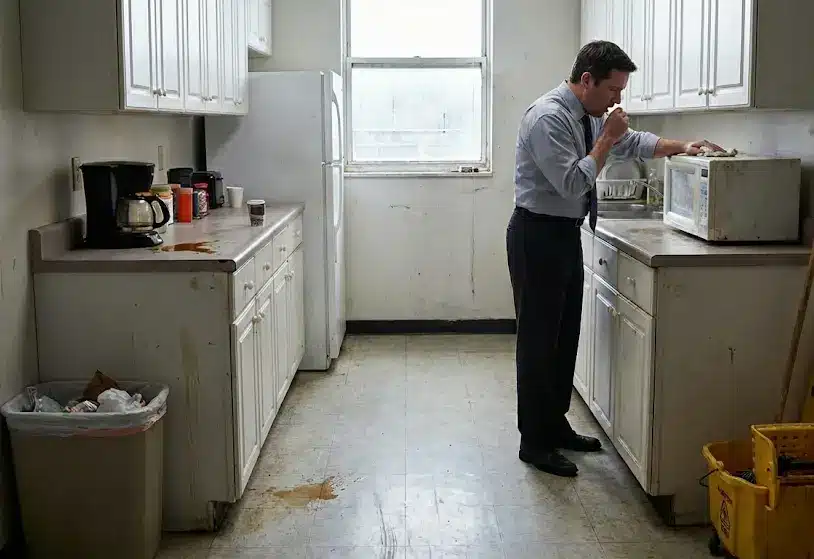
Break rooms: grime around sinks, microwaves, fridge handles, counters, and floors near coffee stations.
If you find three or more of these issues in one walkthrough, it’s usually a sign the cleaning plan needs a reset—not just a one‑time deep clean.
FAQs
How often should a commercial facility be cleaned?
It depends on traffic and use. Most facilities need daily attention for restrooms, trash, and high‑touch areas, with weekly detailing and monthly deeper cleaning to prevent buildup. High‑traffic locations often need daytime support to stay presentable throughout operating hours.
Is disinfecting always necessary?
Not always. In most day‑to‑day situations, consistent cleaning is the foundation. Disinfecting becomes most useful when illness is circulating, after known exposure, or in high‑risk environments that demand stricter protocols.
What’s the biggest “hidden cost” of poor hygiene?
Customer loss without complaints is a major one. People silently judge spaces—especially restrooms and entryways—and may not return. Another hidden cost is accelerated wear on floors and surfaces, which turns into early replacement costs.
What should we prioritize first: restrooms or floors?
If you need to pick one for immediate impact, prioritize restrooms for reputation and floors for safety. Entryways and wet areas should be treated as a top priority because they drive first impressions and slip risk.
Can we build a cleaning plan around our specific facility type?
Yes. Offices, fitness centers, retail stores, dealerships, government buildings, and associations each have different traffic patterns and different “critical zones.” A good plan adjusts frequency, staffing, and checklist priorities around how your facility is actually used.
Ready to upgrade your cleaning plan?
If you want a facility that stays clean consistently—not just right after a deep clean—Nexus Facility Services can build a plan around your traffic, surfaces, and standards.
Get started here: Get Your Free Cleaning Quote
Explore services: Explore Our Services
Service pages: Office Buildings • Retail • Fitness • Dealership • Government • Association Janitorial