How We Maintain Government Facilities: A Walkthrough

See how government facility cleaning works—security, onboarding, QA, green cleaning, and communication—step by step.

Public buildings require a special kind of care—secure, consistent, and unobtrusive. Here’s a transparent look at how our teams maintain government facilities from onboarding to quality assurance.

1) Secure Onboarding & Access

  • Background Checks: All personnel cleared per site policy prior to assignment.
  • Badging & Keys: Chain-of-custody logs; supervisor-controlled key sets; immediate reporting for discrepancies.
  • Site Orientation: Restricted areas, alarms, camera coverage, emergency exits, muster points.

2) Scope Built Around Function

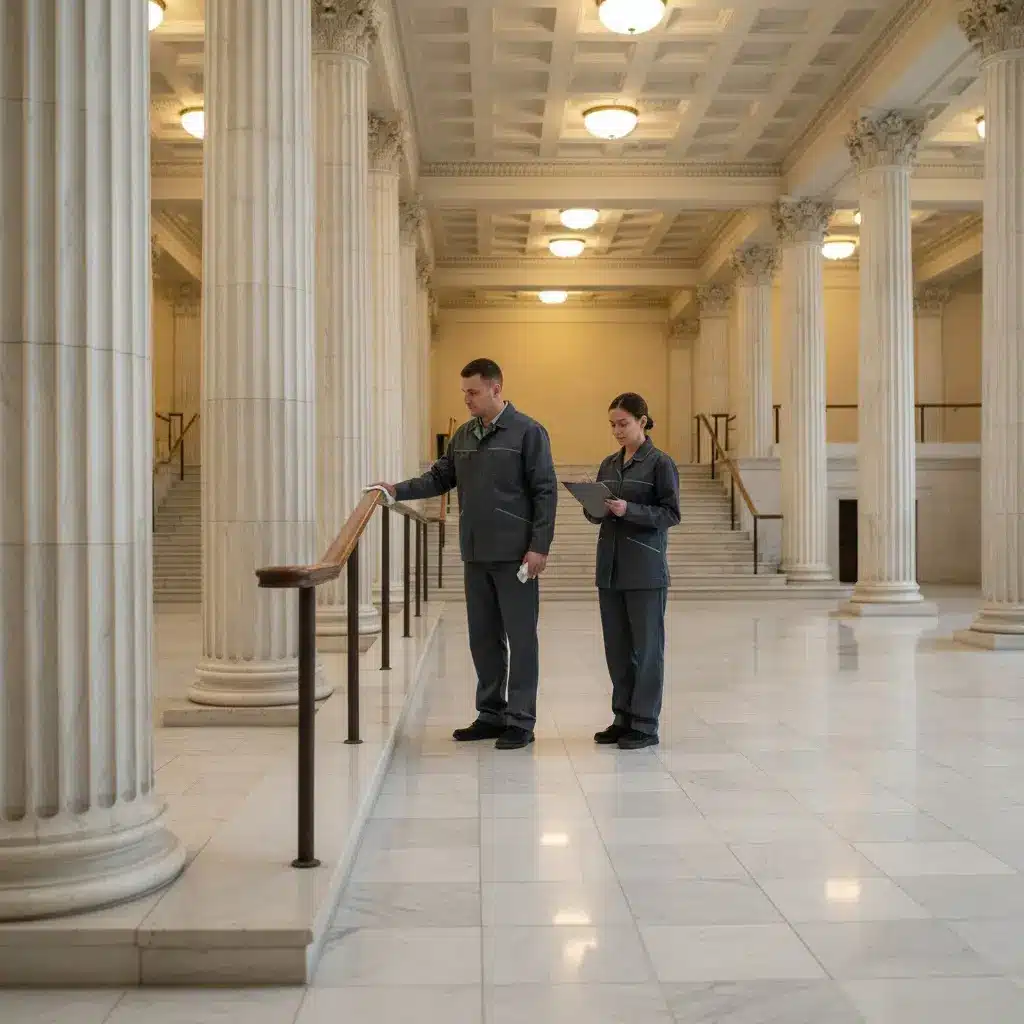
  • Public Zones: lobbies, corridors, elevators, restrooms—high-touch hygiene and slip prevention.
  • Administrative Areas: desks (if permitted), conference rooms, copy/print, shared kitchens.
  • Hearing/Board Rooms: scheduling with custodians to avoid disruptions; audio/visual touchpoint care.
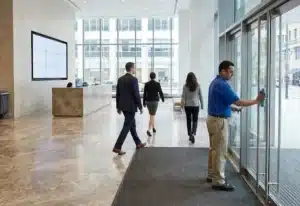
  • Exterior Touchpoints: entrances, handrails, glass, mats.

See our Government Facility Cleaning overview.

3) Cadence: Daily, Weekly, Monthly

  • Daily: restrooms, public counters, door hardware, spot mopping, lobby glass, trash/recycling.
  • Weekly: detail dusting, baseboard edges, full glass service, small machine scrub zones.
  • Monthly/Periodic: floor restoration, carpet extraction, high dusting above 6 ft, stainless brightening.

4) Green Cleaning & SDS Compliance

  • Chemical Selection: reduced VOC where feasible; dilution control with labeled stations.
  • SDS & Training: maintained on site; staff trained on PPE and emergency response.
  • Waste: recycling and custodial waste routes documented; sharps or biohazards escalated per policy.

5) QA, Documentation & Transparency

  • Inspections: scheduled day and night; photo-supported findings.
  • KPIs: response time, re-clean incidents, inspection scores, complaint trend.
  • Reporting: monthly summaries; action plans for recurring observations.
  • Work Orders: submit via the Work Order portal for timestamped resolution.

6) Security Behavior in Practice

  • Never prop secure doors; escort requirements followed.
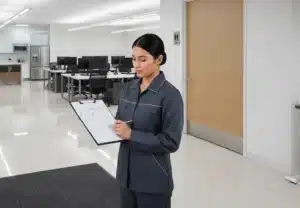
  • Uniforms with visible ID; tools accounted for at shift end.
  • Incident reporting protocol for spills, vandalism, or hazards.

7) Communication & Change Management

We designate a single point of contact and provide an escalation path. Schedule shifts for holidays, hearings, and public events to keep spaces ready without disrupting operations.

FAQ

Do all cleaners have background checks?

Yes. We pre-clear personnel per site policy and maintain documentation for audits.

Can you accommodate evening public meetings?

We schedule around hearings and events with added touch-ups before and after to keep spaces guest-ready.

How do you handle restricted areas?

We document access rules, use supervisor key control, and follow escort policies when required.

Need help keeping shared spaces spotless?

If you want this handled for you—stocking supplies, daily cleaning with high-touch hygiene, weekly fridge resets, and monthly deep cleans—our Office Building Janitorial team can take it off your plate.

Have an issue right now?
Submit a work order →

Share:

More Posts

A professional day porter wiping down a high-touch surface in a modern office lobby during business hours to ensure a clean facility environment.

Day Porter vs. After-Hours Cleaning: Which Is Right for Your Facility?

Day porter service keeps your facility clean during business hours with quick response to restrooms, entryways, spills, and high-touch areas. After-hours cleaning delivers the full nightly reset without disruption. Learn the key differences, when each option makes sense, and how a hybrid plan can keep your space consistently customer-ready.
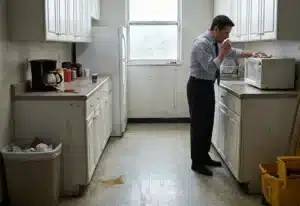

A facility manager performing a walkthrough inspection of a commercial building hallway to identify cleaning issues and prevent costly wear and tear.

The Cost of Poor Facility Hygiene (and How to Avoid It)

Poor facility hygiene costs more than just a bad first impression. It can increase sick days, raise slip-and-fall risk, drive customers away, and accelerate wear on floors, restrooms, and high-traffic areas. In this post, we break down the real business impact of inconsistent cleaning—and share a simple, practical plan to prevent problems with the right routines, checklists, and rapid-response workflow.

Office Cleaning Schedule: Daily, Weekly, Monthly

Use this practical, copy-ready schedule to keep workspaces healthy, presentable, and low-maintenance. Align daily touch-ups with weekly resets and monthly deep care to prevent build-up, protect flooring, and reduce complaints.

Scroll to Top