

Dealership Detailing vs. Janitorial: What’s the Difference?

Understand the difference between vehicle detailing and facility janitorial for dealerships—who does what, where, and when—plus how to coordinate both.

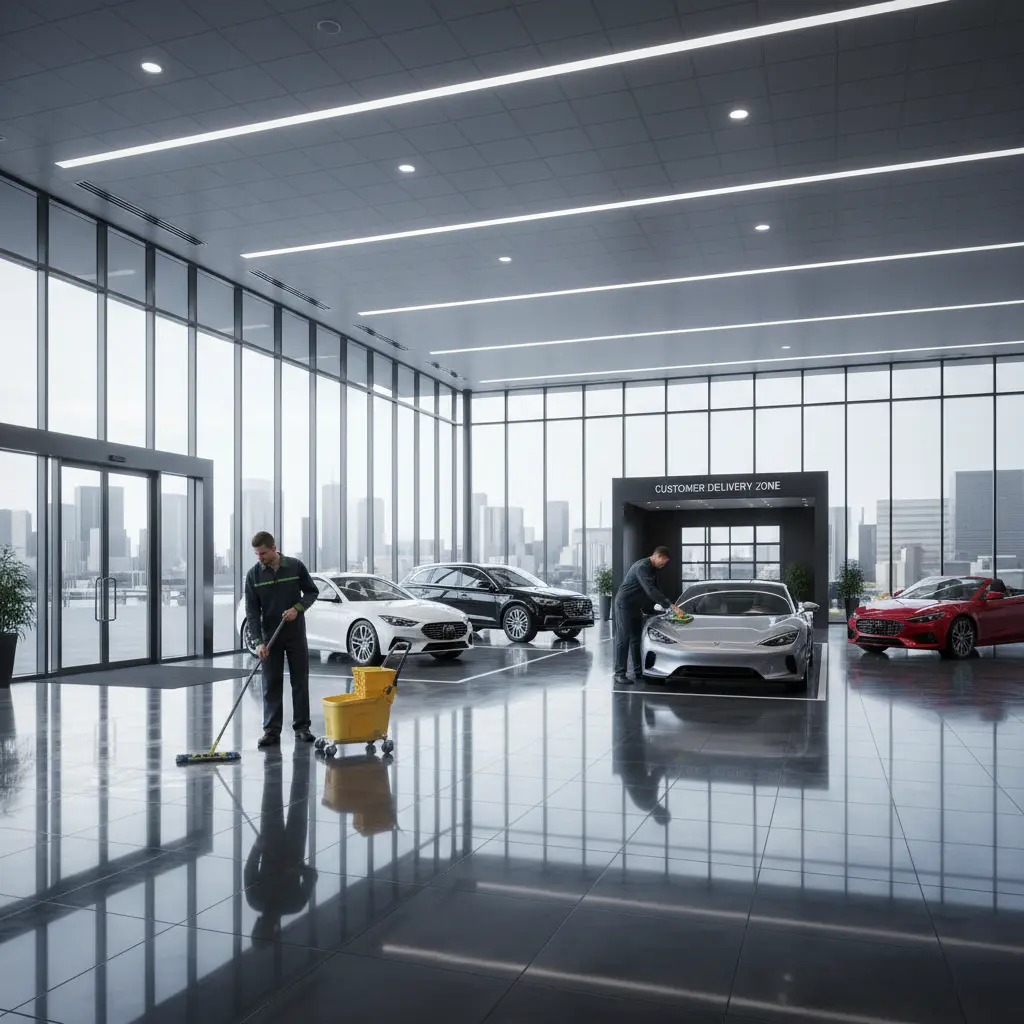
Dealerships run on two kinds of “clean”: vehicles that wow buyers and facilities that welcome them. Detailing and janitorial overlap in goals but differ in scope, tools, and KPIs. Here’s how to coordinate both for a flawless guest experience.

Definitions: Two Complementary Disciplines

Vehicle Detailing

  • Scope: Exterior wash, decontamination, polish, protection; interior vacuum, shampoo, leather/vinyl care.
  • Tools: Foam cannons, polishers, extractors, specialty chemicals.
  • KPIs: Finish quality, swirl control, scent/appearance, delivery-ready timing.

Facility Janitorial

  • Scope: Showroom floors, glass, waiting areas, restrooms, offices, breakrooms, and back-of-house.
  • Tools: Auto-scrubbers, burnishers, microfiber systems, disinfectants, glass care, mats.
  • KPIs: Floor gloss, streak-free glass, odor control, dust control, restroom standards.

Learn more about our Dealership Janitorial programs.

A Seamless Handoff Between Teams

  • Showroom: Janitorial manages floor finish, dusting, and glass clarity. Detailers avoid overspray near glass and displays.
  • Delivery Bays: Janitorial ensures non-slip, dust-free floor; detailers handle vehicle finish. Establish cones and drying zones.
  • Service Lounge: Janitorial controls odor and touchpoint hygiene; detailers may provide courtesy clean for demo vehicles only.
  • Service Drive: Janitorial spot mops and removes debris; detail teams stage vehicles in designated rinse areas to prevent track-in.

Scheduling That Works With Sales & Service

  • Before Open: Dust, glass, floor burnish, restroom reset.
  • Mid-Day: Touch-ups ahead of high-traffic windows and special events.
  • After Close: Full reset, mat maintenance, trash routes.
  • Detail Windows: Coordinate final vehicle prep with sales delivery calendars.

Floor Care Is the Showroom’s First Impression

Tile and polished concrete need dust control and correct pad selection to maintain gloss without haze. Entrances require matting to capture grit and water. Service bays demand degreasing protocols that won’t track onto the showroom finish.

Glass & Lighting: The “Invisible” Sell

Customers notice streaks—especially under bright lighting. Janitorial should schedule full glass cleans weekly with daily edge/detail touch-ups. Detailers should use controlled drying and avoid aerosolized products near display glass and lighting fixtures.

Restrooms & Lounge: Odor and Touchpoint Control

Odors kill ambiance. Daily fixture sanitizing, floor care, and consumable restocking protect the buying experience. In lounges, prioritize tables, chair arms, beverage stations, and charging areas.

QA & Communication

  • Inspections: weekly scored reviews; daily lobby walk-throughs.
  • KPIs: fingerprint recurrence on glass, restroom complaint rate, floor gloss retention, re-clean turnaround.
  • Work Orders: route ad-hoc fixes via the Work Order portal.
  • Business Reviews: monthly huddles with sales/service supervisors to adjust timing around promotions and deliveries.

What Happens When Roles Blur?

When detailing tries to cover facility tasks—or vice versa—standards slide. Floors haze, odors creep in, and glass streaks under showroom lights. Clear lanes and handoffs preserve both outcomes and budgets.

FAQ

Can janitorial handle quick wipe-downs of display vehicles?

Light dusting is possible if agreed in scope, but finish correction and interior care should remain with detailing.

How do we prevent service-bay grime from reaching the showroom?

Use adequate matting, establish wheel-track drying areas, and coordinate janitorial touch-ups during peak transitions.

What’s the ideal glass cadence?

Daily touch-ups plus weekly full glass cleans keeps edges and corners streak-free under bright lighting.

Need help keeping shared spaces spotless?

If you want this handled for you—stocking supplies, daily cleaning with high-touch hygiene, weekly fridge resets, and monthly deep cleans—our Office Building Janitorial team can take it off your plate.


Have an issue right now?

Submit a work order →

Share:

More Posts

A professional day porter wiping down a high-touch surface in a modern office lobby during business hours to ensure a clean facility environment.

Day Porter vs. After-Hours Cleaning: Which Is Right for Your Facility?

Day porter service keeps your facility clean during business hours with quick response to restrooms, entryways, spills, and high-touch areas. After-hours cleaning delivers the full nightly reset without disruption. Learn the key differences, when each option makes sense, and how a hybrid plan can keep your space consistently customer-ready.
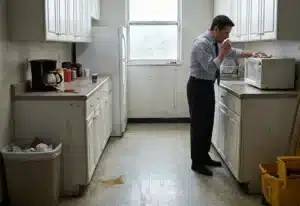

A facility manager performing a walkthrough inspection of a commercial building hallway to identify cleaning issues and prevent costly wear and tear.

The Cost of Poor Facility Hygiene (and How to Avoid It)

Poor facility hygiene costs more than just a bad first impression. It can increase sick days, raise slip-and-fall risk, drive customers away, and accelerate wear on floors, restrooms, and high-traffic areas. In this post, we break down the real business impact of inconsistent cleaning—and share a simple, practical plan to prevent problems with the right routines, checklists, and rapid-response workflow.

Office Cleaning Schedule: Daily, Weekly, Monthly

Use this practical, copy-ready schedule to keep workspaces healthy, presentable, and low-maintenance. Align daily touch-ups with weekly resets and monthly deep care to prevent build-up, protect flooring, and reduce complaints.

Scroll to Top